Thamar University Student Affairs Council Reinforces its Leading Role in Enhancing Student Participation
□ Thamar University Media / Jamal Al-Bahri / Shaaban 2, 1447. January 21, 2026
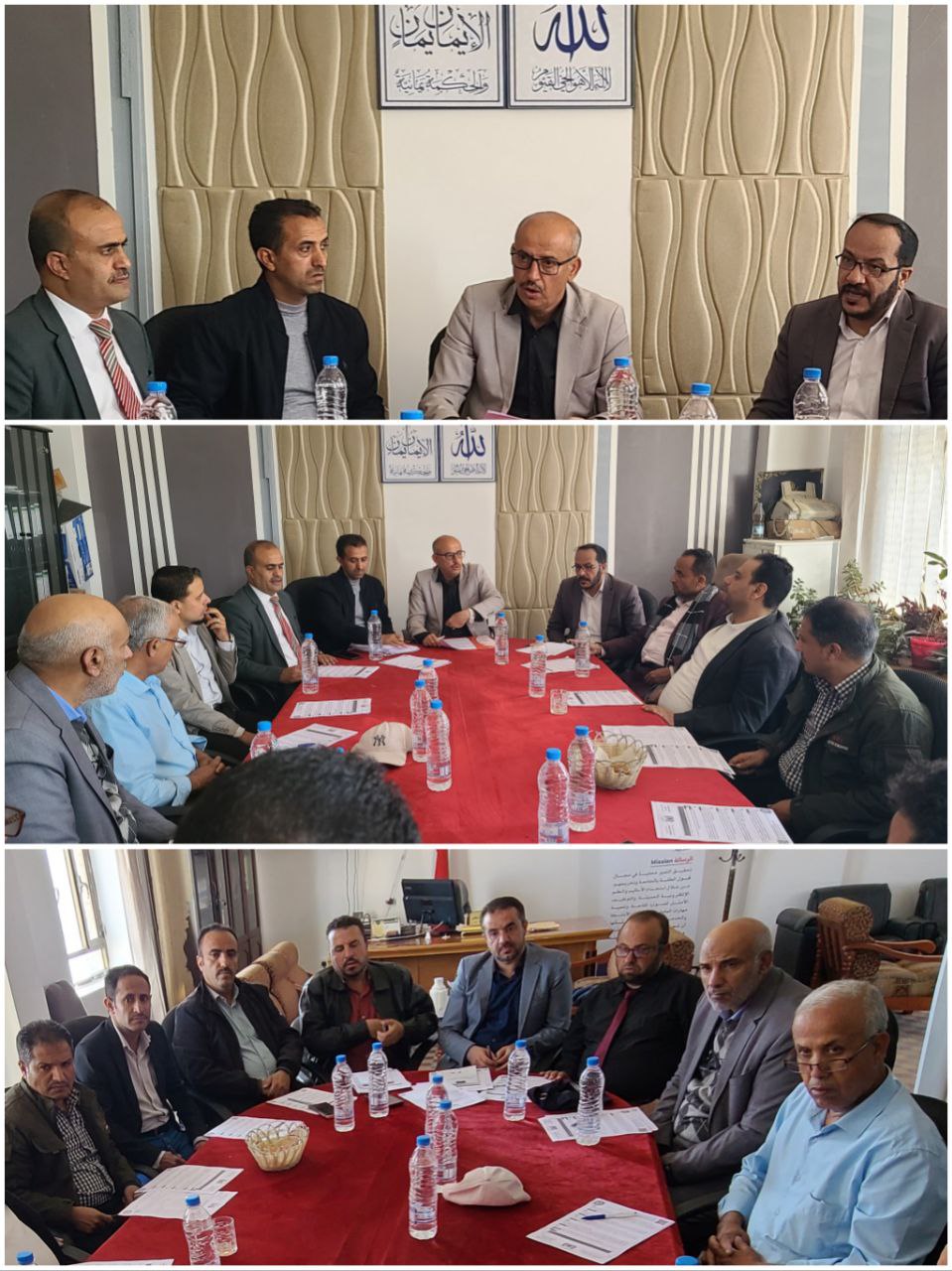
■ The fifth periodic meeting of the Student Affairs Council was held this morning, under the auspices of Professor Dr. Mohammed Al-Haifi, the Rector of Thamar University. The meeting was chaired by Professor Dr. Abdulkafi Al-Rifai, the Vice-Rector of the University for Student Affairs and the Head of the Council, in the presence of the other council members. The atmosphere was characterized by interaction and a focus on student issues and the future of the educational and student activities at the university.
After reviewing and approving the minutes of the previous meeting, the council discussed a range of pressing student issues that affect students' daily lives and prospects for improving university student services.
At the beginning of its meeting, the Student Affairs Council discussed the proposed student capacity, admission rates, and tuition fees for the academic year 1448, (2026/2027 CE). This discussion was based on memoranda submitted by the university's colleges, institutes, and centers.
The proposals were reviewed comprehensively and responsibly, taking into account available academic resources and infrastructure, achieving a balance between admission requirements and the quality of education, and reinforcing the stability of academic and financial policies at Thamar University.
The Council also addressed several organizational and procedural matters related to correcting and amending student data in a number of the university's colleges. This was done based on approved official documents and the approvals of the relevant college councils, considering the circumstances of both current and graduating students, and ensuring the integrity of legal and administrative procedures, as well as adherence to the university's regulations and bylaws.
The council also discussed the mechanism for granting students who have dropped out a final opportunity through the ERP system, examining the controls and standards necessary to regulate these opportunities in a way that ensures fairness and transparency, and contributes to enabling students to complete their education within a disciplined and responsible institutional framework.
Dr. Al-Rifai emphasized the importance of active participation and open dialogue between administrative and student bodies to overcome challenges and take new steps that enhance the effectiveness of coordination between the council and the university departments concerned with student affairs, ultimately benefiting students and enriching their experiences.
At the conclusion of the meeting, a set of specific recommendations was adopted to develop student activities, strengthen communication between students and university administration, and establish clear timeframes for monitoring the implementation of the agreed-upon outcomes.