The College of Computing and Information Technology, Thamar University, Hosts the Largest Scientific Event in Smart Technologies and Affirms Its Research Leadership with the Inauguration of the Sixth International Conference (eSmarTA-2026)
The College of Computing and Information Technology, Thamar University, Hosts the Largest Scientific Event in Smart Technologies and Affirms Its Research Leadership with the Inauguration of the Sixth International Conference (eSmarTA-2026)
□ Thamar University Media | Safar 20, 1448. August 4, 2026
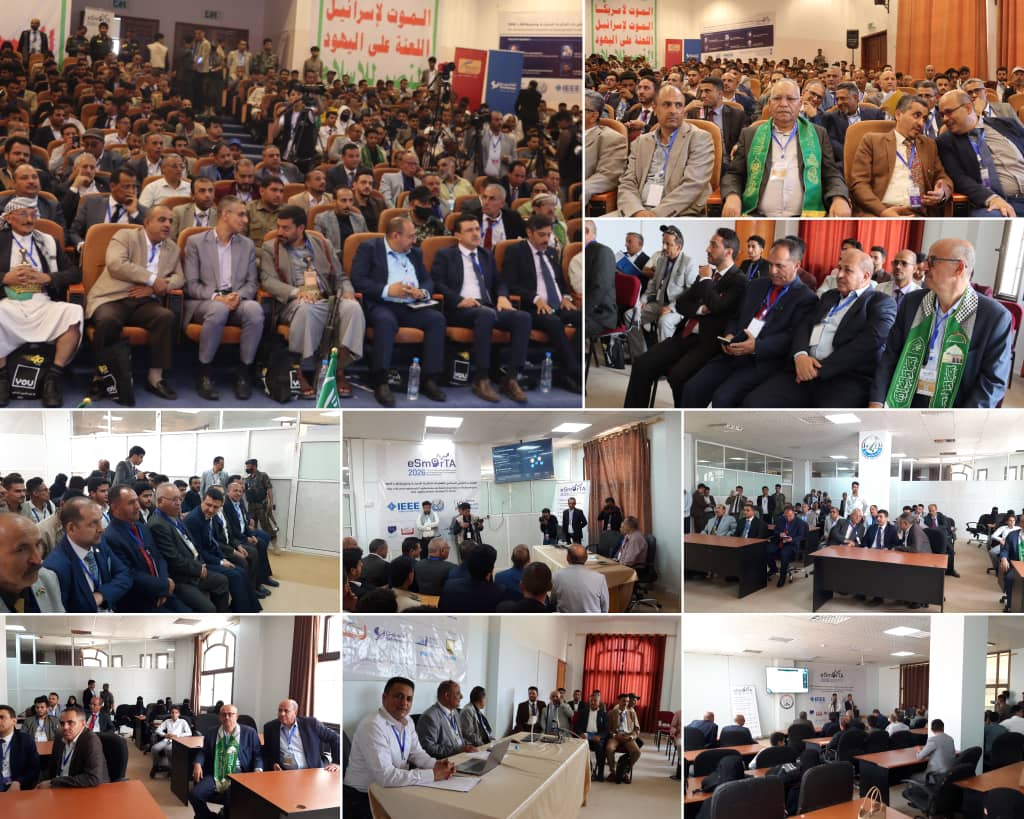
■ In a distinguished national and international scientific event, Thamar University today inaugurated the proceedings of the Sixth International Conference on Emerging Smart Technologies and Applications (eSmarTA-2026), organized by the College of Computing and Information Technology at the university, held over the period 4–5 August 2026, with wide participation from researchers, academics and experts from within Yemen and abroad, and with high-level official and academic attendance that affirmed the advanced standing the university has attained in the fields of scientific research and modern technologies, under the patronage Professor. Mohammed Ahmed Miftah, the Acting Prime Minister.
The conference's opening session witnessed the presence of Mr. Mohammed Nasser Al-Bukhaithi, the Governor of Dhamar Governorate, Dr. Hatem Al-Duais, the Deputy Minister of Education and Scientific Research, Professor Dr. Mohammed Mohammed Al-Haifi, the Rector of Thamar University and the Honorary Rector of the conference; Professor Qais Al-Nazili, the Chair of the Sixth International Conference on Emerging Smart Technologies and Applications; representatives of Yemen Research Foundation, the conference's co-organizer, and supporting entities, as well as the Rectors of several Yemeni universities, including Professor Dr. Nasr Al-Hujjaili, the Rector of Ibb University, Professor Dr. Ahmed Al-Arami, the Rector of Al-Baydha University, Professor Dr. Abdullah Mohammed Al-Matari, the Rector of Jibla University for Medical and Health Sciences, and Professor Mujahid Ali Hatim Masa'ar, the Rector of 21 September University for Medical and Applied Sciences, along with a number of academic and research leaders.
Also the opening events were attended by the Head of General Mobilization in the Governorate, Ahmed Hussein Al-Dhawrani, First Deputy Governor of Dhamar, and the Vice Rectors of Thamar University, Professor Dr. AbdulKafi Al-Rifai, the Vice-Rector for Student Affairs, Professor Dr. AbdulKarim Zabiba, the Vice-Rectorvfor Graduate Studies and Scientific Research, Professor Dr. Adel Al-Ansi, the Vice-Rector for Academic Affairs, Dr. Essam Wasel, the Rector's Assistant for Centers Affairs, Dr. Mohammed Hutrum, the General Secretary of the University, Professor Dr. Bashir Al-Maqaleh, the Dean of the College of Computing and Information Technology, Dr. Khaled Al-Husseini, the Consultant of the Rector for Automation and Quality Affairs, in addition to college deans, faculty members, researchers, and those interested in technology and artificial intelligence.
In his address, the Governor of Dhamar Governorate Mr. Mohammed Nasser Al-Bukhaithi affirmed that the convening of this conference at Thamar University reflects the scientific and national role undertaken by the university, commending it as an academic and civilizational edifice that keeps pace with global technological developments. The Governor highlighted the importance of directing scientific research toward national needs and strengthening partnerships between the university, the private sector, and technical institutions, to contribute to the development of AI applications and building national capacities capable of addressing the requirements of the digital future.
For his part, Dr. Hatem Al-Duais, the Deputy Minister of Education and Scientific Research, emphasized the importance of transitioning scientific research from theoretical aspects to practical applications that serve society and meet national needs, commending Thamar University's efforts in hosting this scientific event and maintaining academic rigor and research standards that enhance the standing of Yemeni scientific research.
The Deputy Minister noted that the upcoming phase requires supporting applied research, encouraging innovation, and translating scientific study findings into implementable technological solutions, thereby contributing to development and building a knowledge society.
In his opening address, Professor Dr. Mohammed Mohammed Al-Haifi, the Rector of Thamar University, welcomed participants, researchers, and guests, affirming that the university's hosting of this international conference extends its academic mission of supporting scientific research and innovation, and consolidating its presence as an active scientific institution in keeping pace with global technological transformations. The Rector of the University emphasized that researchers and students represent the real investment and the desired future, calling on participants to make the conference a platform for exchanging expertise and launching toward broader horizons for building the future. Dr. Al-Haifi appreciated the efforts of the scientific and organizing committees, partners, and supporters, foremost among them Yemen Mobile as the official sponsor, the General Telecommunications Corporation as the diamond sponsor, Yemen Telecom, and Yemen Research Foundation as the co-organizer, affirming that this cooperation reflects the importance of integration between academic institutions and technology sectors in supporting research and innovation.
In his address, Professor Dr. Qais Al-Nazili, thevChair of the Sixth International Conference on Emerging Smart Technologies and Applications (eSmarTA-2026), stated that the conference's convening at Thamar University represents an important scientific milestone reflecting the university's commitment to supporting scientific research and its dedication to keeping abreast of the latest global developments in technology and artificial intelligence. The Conference Chair noted that the sixth edition witnessed broad participation from researchers and academics, with its scientific papers covering a range of advanced fields representing the future of technology, most notably artificial intelligence and machine learning, data science, digital transformation, the Internet of Things, cybersecurity, image processing and computer vision, and intelligent systems. He explained that these scientific contributions underscore the importance of integration among various scientific disciplines to produce innovative technological solutions capable of addressing contemporary challenges, commending the organizational and scientific level presented by Thamar University, represented by the College of Computing and Information Technology and the scientific and organizing committees, which contributed to the success of this international event.
In turn, the representative of Yemen Research Foundation, the conference's co-organizer, emphasized the importance of collaboration with Thamar University in organizing this distinguished scientific event, noting that the partnership between research institutions and universities represents a cornerstone for advancing innovation and encouraging researchers to present applied studies that serve society and meet future needs. He commended Thamar University's role in providing the appropriate academic environment for hosting specialized scientific conferences, affirming that this collaboration exemplifies the importance of integration among national institutions in supporting scientific research and expanding the scope of publication and scientific communication with researchers locally and internationally.
On the sidelines of the conference proceedings, Thamar University signed several academic and scientific cooperation agreements with a number of university institutions, as part of the university's approach to strengthening partnerships and expanding cooperation horizons among Yemeni higher education institutions.
The signed agreements included a cooperation agreement with 21 September University for Medical and Applied Sciences and another with Jibla University for Medical and Health Sciences, aimed at enhancing cooperation in academic and research fields, exchanging expertise, and implementing joint programs and projects serving the educational and research process. The leadership of Thamar University affirmed that signing these agreements extends its mission of building bridges of scientific cooperation, strengthening institutional partnerships, and benefiting from mutual expertise to contribute to the development of higher education and scientific research in Yemen.
The organization of the Sixth International Conference on Emerging Smart Technologies and Applications reflects the advanced standing Thamar University has achieved in hosting specialized scientific events, as the university has become a gathering point for researchers and experts and a platform for knowledge exchange in modern technological fields. The conference also underscores the pivotal role played by the College of Computing and Information Technology at Thamar University in leading the scientific movement related to emerging technologies and preparing specialized competencies capable of contributing to the digital transformation journey, through its academic programs, research activities, and scientific partnerships.
This event takes place amid growing global interest in smart technologies and their importance in developing various sectors, as the conference addressed AI applications across multiple fields, cybersecurity solutions, data analytics, and intelligent systems, opening new horizons for researchers, students, and institutions to benefit from the accelerating technological revolution. The conference proceedings reflected a high level of organization and preparation, thanks to the joint efforts exerted by Thamar University's leadership, the Deanship of the College of Computing and Information Technology, the scientific and organizing committees, and partners and supporters, presenting a bright image of Yemeni universities' capacity to host international scientific events and contribute to knowledge production.
At the conclusion of the opening day, participants affirmed that the success achieved by the Sixth International Conference on Emerging Smart Technologies and Applications (eSmarTA-2026) confirms that Thamar University is steadily advancing toward strengthening its scientific and research presence and consolidating its position as a national academic beacon keeping pace with the digital age, opening broad horizons for researchers and innovators to build a future grounded in science and technology.
The convening of the Sixth International Conference on Emerging Smart Technologies and Applications (eSmarTA-2026) affirms that Thamar University continues to consolidate its presence as an active academic institution in the fields of scientific research and innovation, advancing steadily toward enhancing its role in keeping pace with global technological transformations and building a scientific environment that accommodates future aspirations. This conference embodies a bright image of the university's organizational and scientific capabilities and its qualified academic and research staff capable of hosting and managing major scientific events, thereby enhancing its standing among Yemeni higher education institutions and supporting its mission of knowledge production and community service. The conference also represents an extension of Thamar University's efforts to support digital transformation, encourage applied research, and link higher education outputs with development needs, through attention to future-oriented specializations, foremost among them artificial intelligence, smart technologies, data science, and cybersecurity.
The success of the first day of this scientific event is the fruit of integration among the university leadership, the Deanship of the College of Computing and Information Technology, the scientific and organizing committees, and partners and supporters, affirming that institutional work and academic cooperation form a solid foundation for achieving qualitative achievements in research and innovation. With this wide scientific presence, diverse academic participation, and specialized research outputs, the Sixth International Conference on Emerging Smart Technologies and Applications (eSmarTA-2026) adds a new milestone to Thamar University's record of achievements, affirming its continued role as a scientific beacon contributing to building a knowledge society and shaping a more advanced digital future.
The conference is supported by a number of leading national institutions in the fields of telecommunications, technology, and the banking sector, foremost among them Yemeni-Omani Telecommunications Company (YOU) as the official sponsor of the conference, Yemen Telecommunications Company (TELE YEMEN) as the diamond sponsor, alongside TeleYemen, Yemen Mobile, and GACBANK. This support embodies the integration of roles between academic institutions, technological and national sectors, and affirms the importance of partnership between the university and the business sector in supporting scientific research, encouraging innovation, and contributing to building a secure and sustainable digital future.